Why does that fine white film keep reappearing on your brand-new surfaces no matter how many times your team wipes them down? It’s a common frustration for property managers who realize that standard janitorial methods simply aren’t enough for a post-build environment. Learning how to clean a building after construction is a technical protocol that safeguards both your expensive new finishes and the health of future occupants. You’ve invested significant capital into this project, and the last thing you want is abrasive debris scratching high-end windows or hidden silica dust compromising air quality.
We understand that the transition from a chaotic job site to a polished space can feel like an overwhelming operational burden. This guide will help you master the multi-phase process required to transform any dusty site into a pristine, move-in-ready commercial environment. You’ll learn the specific sequence of the three-stage clean, how to maintain compliance with 2026 OSHA safety standards for respirable crystalline silica, and the professional techniques used to protect your investment. By following this structured approach, you’ll ensure a successful project handover that reflects the high standards and integrity of your business.
Key Takeaways
- Recognize the critical difference between standard dust and industrial debris, ensuring your team uses the right tools to protect long-term air quality.
- Master the structured three-phase protocol for how to clean a building after construction to transform a high-debris site into a move-in-ready environment.
- Protect your HVAC system and ensure a lasting clean by prioritizing immediate filter replacements and thorough vent inspections.
- Use our comprehensive checklist to handle sensitive materials like high-rise glass and hard floors with the care needed to prevent permanent surface damage.
- Learn how to evaluate professional cleaning partners and why a dedicated Day Porter is the secret to a stress-free grand opening.
Understanding the Unique Challenges of Post-Construction Dust
You’ve finally reached the end of a major renovation or new build, but the space doesn’t feel ready yet. There’s a heavy, chalky residue clinging to every surface. Understanding how to clean a building after construction begins with recognizing that this isn’t typical household dust. While “living dust” consists mostly of organic matter like hair and skin cells, construction debris is a complex, inorganic mixture of minerals and synthetic particulates. It’s heavier, more pervasive, and significantly more difficult to manage without the right equipment.
Standard commercial vacuums often fail during this phase because they lack the specialized filtration needed to trap the ultra-fine composition of construction dust. Instead of capturing the debris, these machines aerosolize it, blowing microscopic particles back into the air. This explains why dust seems to “reappear” on countertops and windows days after a cleaning attempt. These particles can stay suspended in the air for up to 48 hours, settling only when the environment is completely still.
The Chemistry of Construction Debris
Drywall particulates, sawdust, and masonry dust are highly absorbent and chemically reactive. When these materials interact with the humidity in your building’s HVAC system, they can form a gritty paste that clogs vents and damages sensitive electronics. These particles are also physically abrasive. On a microscopic level, they act like sandpaper. If your team uses improper wiping techniques or the wrong cloth, they can permanently dull high-end finishes or leave fine scratches on new glass before the grand opening.
Safety First: Protecting Your Health and Your Investment
In 2026, OSHA continues to enforce strict Permissible Exposure Limits (PEL) for respirable crystalline silica. This standard is a critical part of commercial property management. At BeVa Cleaning Solutions, we treat the post-construction phase as a form of risk management. Using industrial-grade, HEPA-filtered equipment is essential to meet air quality requirements and protect future occupants from respiratory hazards.
Beyond health, a professional handover protects the financial investment you’ve made in new materials. A truly clean environment provides a psychological benefit that shouldn’t be underestimated. When tenants or employees walk into a space that is flawlessly polished, it creates a sense of tranquility and trust. It signals that the project is truly complete and that the space is safe, healthy, and ready for business.
The Three Essential Phases of a Professional Post-Construction Clean
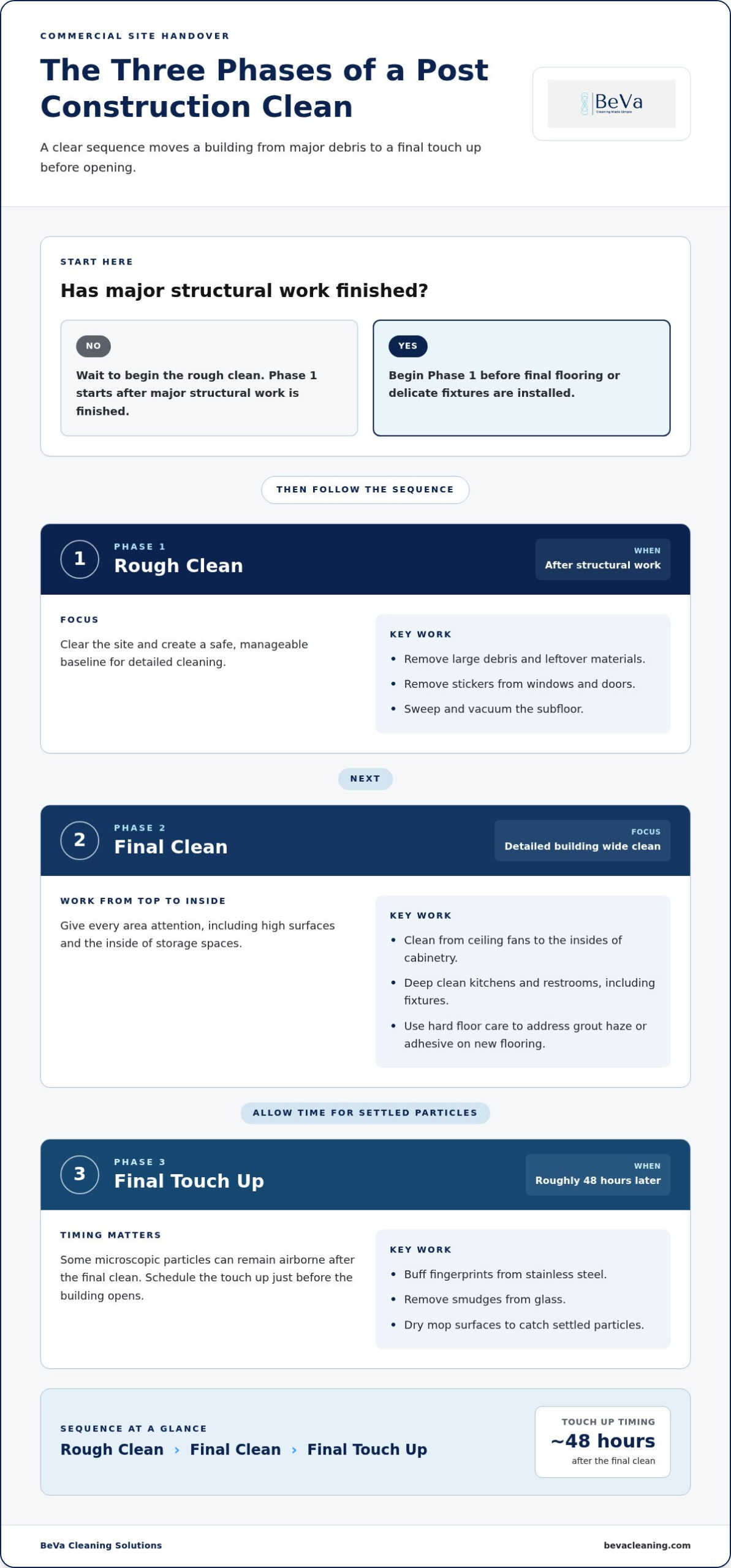
Many property owners make the mistake of attempting a comprehensive clean all at once. This often leads to re-contamination, where fine dust from one area migrates to a space that was just scrubbed. Learning how to clean a building after construction requires a disciplined, three-stage technical protocol. Each phase serves a specific purpose in the transition from a chaotic work site to a polished business environment. Skipping any of these steps risks leaving behind hidden hazards or damaging expensive new finishes.
Phase 1: Clearing the Way (The Rough Clean)
The first stage occurs once the major structural work is finished but before the final flooring or delicate fixtures are installed. We focus on removing large debris, leftover materials, and the ubiquitous stickers from windows and doors. Our teams sweep and vacuum the sub-floor to prevent trapped allergens from lingering under the new carpet or tile. Following OSHA safety guidelines ensures that the crew remains safe while navigating these early-stage hazards. This phase creates a safe, manageable baseline for the detailed work to follow.
Phase 2: The Deep Dive (The Final Clean)
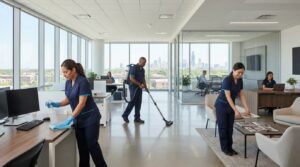
This is the most labor-intensive portion of the process. Every inch of the building receives attention, from the tops of ceiling fans to the insides of cabinetry. We deep-clean kitchens and restrooms, ensuring all fixtures are sanitized and free of drywall spray. Professional hard floor care services are often deployed here to remove stubborn grout haze or adhesive from new installations. This stage is where the “Final Polish” begins to emerge, transforming the site into a recognizable commercial space. It’s a methodical process that requires a high degree of integrity to ensure no corner is overlooked.
Phase 3: The Final Polish (The Touch-Up)
Even with the best industrial equipment, some microscopic particles stay airborne for days. This final phase occurs roughly 48 hours after the final clean, just before your grand opening. We buff out fingerprints from stainless steel, remove smudges from glass, and perform a final dry mop of all surfaces to catch any settled particles. This ensures your building looks pristine and smells fresh for the first person who walks through the door. If you want to ensure your project handover is flawless, partnering with a dependable team for new construction final clean services provides that necessary layer of expert oversight.
Managing Air Quality and HVAC Filtration Post-Build
Even after the three phases of surface work are complete, knowing how to clean a building after construction involves looking beyond what is visible to the naked eye. The air you breathe in a newly finished space often carries a heavy load of microscopic particulates that can settle long after the crew has left. This “invisible danger” is primarily housed within your HVAC system. During the build, fine dust migrates into ductwork, where it remains trapped until the system is activated, potentially ruining your freshly cleaned surfaces and compromising the health of your team.
Filter replacement is a non-negotiable step in the handover process. Construction dust is far more abrasive than standard office dust, and it can quickly clog standard pleated filters, putting undue strain on your new mechanical systems. We recommend a complete cycle of filter changes: once during the rough clean and again immediately before occupancy. To truly clear the air, we utilize industrial air scrubbers and HEPA-filtered vacuums. HEPA filtration stands as the gold standard for post-construction air safety, providing the necessary barrier against microscopic silica and drywall particulates by capturing 99.97% of particles as small as 0.3 microns.
Cleaning the Lungs of Your Building
The HVAC system acts as the lungs of your facility. Our process includes vacuuming out every register, vent, and return to ensure no hidden pockets of debris remain. We don’t just stop at the vents. We also wipe down the exterior of HVAC units and clean the floors of mechanical rooms to prevent dust from being pulled back into the system. This thoroughness ensures that when you flip the switch on your climate control, you’re greeted with pure, clean air rather than a cloud of drywall residue.
The Importance of Timing in Air Purification
Timing is everything when it comes to air quality. You should wait at least 24 hours after the most intensive cleaning activities before performing a final air purification cycle. This allows the majority of airborne particles to settle so they can be captured by our equipment rather than remaining in suspension. Coordinating this schedule with your HVAC contractors ensures the system is balanced and clean before the grand opening. When evaluating industrial cleaning services in Chicago, prioritize firms that integrate these technical air quality protocols into their standard workflow. This level of detail removes the operational burden from your shoulders and ensures a healthy, tranquil environment for everyone who enters.
Comprehensive Post-Construction Cleaning Checklist for Commercial Sites
Mastering how to clean a building after construction requires a granular focus that spans from the highest window to the deepest floor grout. A checklist ensures no technical detail is missed during the transition to occupancy. We follow a top-down philosophy, starting with ceilings and walls to ensure that falling dust doesn’t re-soil surfaces that have already been treated. This includes dusting light fixtures and ceiling fans before moving to eye-level hardware like hinges, handles, and electrical plates, which we polish to a high shine. This methodical approach eliminates ambiguity and ensures a consistent result across the entire facility.
The Vertical Challenge: High-Rise and Window Care
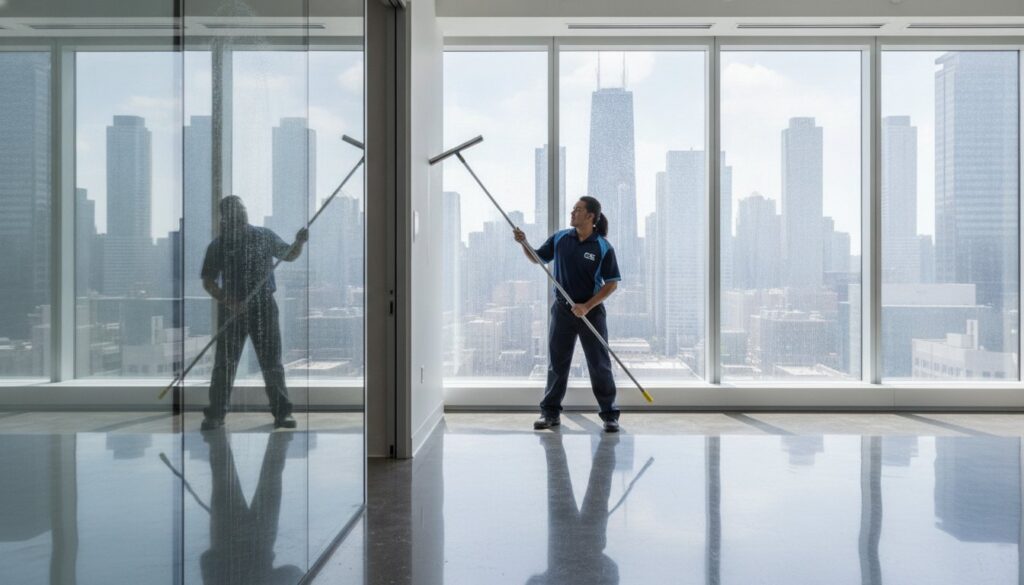
Windows often bear the brunt of construction activity, collecting paint overspray, heavy caulking, and stubborn adhesives. Our team specializes in high rise window cleaning in Chicago, adhering to strict safety protocols while delivering a streak-free finish. We use specialized tools to remove masonry grit from tracks and sills, preventing the abrasive “crunch” that can damage window mechanisms over time. Removing stickers and protective films requires a delicate touch and the right chemical balance to avoid scratching the new glass, a common error in non-professional cleanups.
Floors represent a significant portion of your capital investment and require professional care to maintain their warranty. For hard surfaces, we provide comprehensive stripping and waxing to create a resilient, reflective finish that withstands heavy foot traffic. Deep-cleaning grout lines is essential, as drywall dust often settles into these porous areas, causing permanent discoloration if not addressed quickly. Whether you’re managing marble, polished concrete, or luxury vinyl, our Hard Floor Services ensure the surface is protected for the long term. Understanding the full scope of a new construction final clean helps property managers set realistic expectations for protecting these high-value floor investments from day one.
Common Areas and Specialized Rooms
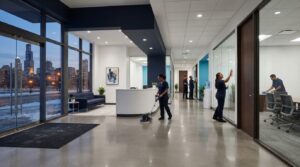
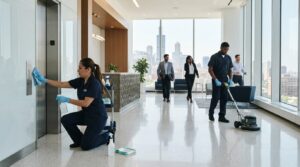
Every room has unique requirements that standard janitorial services might overlook. Restrooms and breakrooms must be sanitized to health-code standards, ensuring all plumbing fixtures are free of construction residue and film. We detail elevator cabs, paying close attention to the stainless steel surfaces and the track grooves where debris often hides. For specialized environments like data rooms and server racks, we use anti-static equipment to remove fine dust without risking sensitive hardware. This level of precision is what defines a professional handover and provides the tranquility you need before the grand opening.
If you’re ready to see your project in its best light and protect your investment, request a professional walkthrough from BeVa Cleaning Solutions to finalize your cleaning plan.
Transitioning to Occupancy: Choosing the Right Cleaning Partner
The final hurdle of any construction project is the transition from a work site to a functional place of business. You’ve navigated the technicalities of air filtration and followed the meticulous three-phase protocol, but now comes the actual move-in. Choosing the right partner to manage this transition is just as important as knowing how to clean a building after construction. While general labor or DIY attempts might seem cost-effective, they often lack the industrial-grade equipment and specialized training required to protect your investment. A specialized firm doesn’t just clean; they act as a risk management partner, ensuring that your grand opening is flawless and free of operational burdens.
During the initial move-in week, we recommend utilizing a Day Porter Cleaning service. As furniture is delivered and staff begin to occupy the space, new smudges and “settled dust” will inevitably appear. A Day Porter provides on-site, real-time maintenance, handling the minor messes that occur during the chaos of a move. This allows you to focus on your business operations while we maintain the tranquility and professional appearance of your new environment. It’s the final bridge that connects the construction phase to your daily operations.
Why General Janitorial Isn’t Enough
Standard janitorial crews typically arrive with basic mops and household-grade vacuums. For a post-build environment, you need heavy-duty floor scrubbers and industrial vacuums equipped with HEPA filtration to handle the abrasive grit we’ve discussed. There are also significant insurance and liability considerations to keep in mind. If an untrained worker uses an abrasive chemical on a specialized finish or scratches a high-rise window, the damage can be permanent and costly. BeVa’s principled expertise ensures a stress-free handover by matching the right technical solution to every specific material in your building.
Ongoing Excellence with BeVa
Once the initial dust has settled, the focus shifts from recovery to preservation. Transitioning from a final post-construction clean to a structured commercial cleaning Chicago maintenance plan ensures your facility remains in peak condition for years to come. We value traditional virtues like honesty and hard work, and having a partner who knows your building’s history from the sub-floor up creates a narrative of comprehensive care. Whether your facility is in Munster, Crown Point, or the heart of Chicago, we are ready to help. Contact BeVa Cleaning Solutions today to request a site-specific proposal and take the first step toward a pristine professional environment.
Secure the Final Polish for Your Commercial Investment
Mastering the transition from a dusty construction site to a pristine workspace requires more than just a standard cleaning crew. It’s a strategic process involving technical air purification, structured phases, and deep expertise in protecting high-end materials. By following the professional protocols for how to clean a building after construction, you ensure your facility is safe, compliant, and ready to impress on day one. You’ve worked hard to bring this project to life, and the final handover should reflect that dedication.
At BeVa Cleaning Solutions, we bring a dedicated commercial focus to every project. We use specialized equipment for high-rise window cleaning and hard floor maintenance to deliver industrial-grade results that general janitorial services can’t match. Our team provides local expertise across Chicago and Northwest Indiana, acting as a dependable partner that understands the specific demands of your region. Ready to transform your site? Get a Professional Post-Construction Quote from BeVa Cleaning Solutions today. Your grand opening should be a moment of celebration, and we’re here to ensure your new building truly shines.
Frequently Asked Questions
Is it safe to breathe in a building immediately after construction?
It isn’t safe to occupy a building immediately after construction because of the high concentration of airborne particulates. Fine dust from drywall and masonry stays suspended for up to 48 hours, posing a risk to respiratory health. We recommend waiting until a professional team has utilized HEPA filtration and completed a full surface decontamination to ensure the air quality meets safety standards for your employees.
How long does a professional post-construction cleaning take?
The duration of the process varies based on the facility size, but a comprehensive three-phase clean typically takes three to seven business days. Larger commercial sites or high-rise buildings may require a more extended schedule to ensure every detail is addressed. We work closely with your contractors to provide a predictable timeline that eliminates operational burdens and meets your specific occupancy deadlines.
Can I use a regular shop-vac for construction dust?
You should avoid using a standard shop-vac because it lacks the filtration needed to capture fine silica and drywall dust. These machines often exhaust microscopic particles back into the air, which then settle on your new surfaces. Our teams use industrial-grade vacuums with HEPA filters. These are essential for anyone learning how to clean a building after construction safely while protecting the integrity of the indoor air quality.
What is included in a “rough clean” vs. a “final clean”?
A rough clean involves removing large debris and clearing tracks, while a final clean is a detailed sanitization of every surface from ceiling to floor. The rough clean prepares the site for final installations like flooring and cabinetry. The final clean focuses on the aesthetic and hygienic details, ensuring the space is move-in ready. Both phases are necessary for a successful handover and a professional result.
How do you remove drywall dust from walls without damaging the paint?
We remove drywall dust by using a top-down dry-mopping method with industrial-grade microfiber tools. This lifts the particulates without the abrasive “sandpaper” effect that can ruin fresh paint or delicate finishes. If stubborn spots remain, we use a slightly damp, pH-neutral cloth to ensure a streak-free result. This careful approach maintains the visual integrity of your walls while removing every trace of construction residue from the environment.
What happens if I don’t clean the HVAC system after a renovation?
Neglecting the HVAC system causes trapped construction dust to blow through your vents indefinitely. This constant re-circulation compromises the health of occupants and puts a significant strain on your new mechanical equipment. Over time, this debris can lead to expensive repairs or a total system failure. Proper cleaning and filter replacement are essential to protect your investment and maintain a tranquil, healthy environment for your staff.
Do I need to clean the building again after the furniture is moved in?
A final touch-up is necessary because moving furniture and equipment always creates new dust and scuff marks. Even a perfectly cleaned building will show fingerprints and smudges once the move-in begins. Our Day Porter services bridge this gap, providing on-site support during the transition. This ensures that your building remains in pristine condition, allowing your team to settle in without the burden of lingering operational messes.
Why is professional window cleaning necessary after construction?
Professional window cleaning is vital because construction glass often has unique contaminants like silicone, mortar, and heavy adhesives. Standard cleaning methods frequently leave streaks or, even worse, cause permanent scratches by dragging masonry grit across the surface. We use specialized equipment and techniques to remove these stubborn materials safely. This level of care ensures your high-rise glass remains clear and protected, reflecting the overall quality of your project.