
Could a single overlooked anchor point certification result in an OSHA penalty of up to $16,550 for your facility this year? For many facility managers, exterior building window cleaning is often viewed as a simple cosmetic task until a compliance audit or a permanent hard water stain reveals the high stakes involved. You likely already know that keeping your glass clear is vital for tenant satisfaction and professional branding. However, balancing the logistics of high-rise access with the rigorous 2026 safety standards can feel like an operational burden that never quite ends.
We’re here to turn that burden into a streamlined asset preservation strategy that brings tranquility to your daily operations. This reference guide promises to help you master the technical requirements, safety protocols, and long-term benefits of professional exterior maintenance. We’ll explore the critical updates to the OSHA Hazard Communication Standard, the 300 foot height limitations for Rope Descent Systems, and the specific methods used to prevent urban pollution from etching your glass permanently. By the end of this article, you’ll have a clear roadmap for maintaining a pristine, compliant, and welcoming commercial environment.
Key Takeaways
- Identify the critical distinction between routine glass washing and professional glass restoration to preserve your building’s long-term structural integrity.
- Recognize how specific urban pollutants and hard water minerals cause permanent etching and why specialized removal is necessary for high-rise properties.
- Discover the strategic application of water-fed pole systems and traditional hand-cleaning during exterior building window cleaning to achieve a flawless, streak-free finish.
- Master the 2026 safety compliance landscape, including the latest OSHA rope descent regulations and ANSI/IWCA standards, to protect your facility from liability.
- Learn how a dedicated partnership with a technical maintenance expert removes the operational burden and provides psychological peace of mind for facility managers.
What is Exterior Building Window Cleaning for Commercial Facilities?
Professional exterior building window cleaning is far more than a simple aesthetic choice; it’s a specialized technical service that safeguards a property’s most visible asset. While many view it as a seasonal chore, facility managers in 2026 recognize it as a core component of building envelope maintenance. There’s a significant distinction between basic "window washing" and "commercial glass restoration." Washing removes surface dust and grime, but restoration involves the deep removal of mineral deposits and chemical etching that can permanently damage the glass substrate if left untreated.
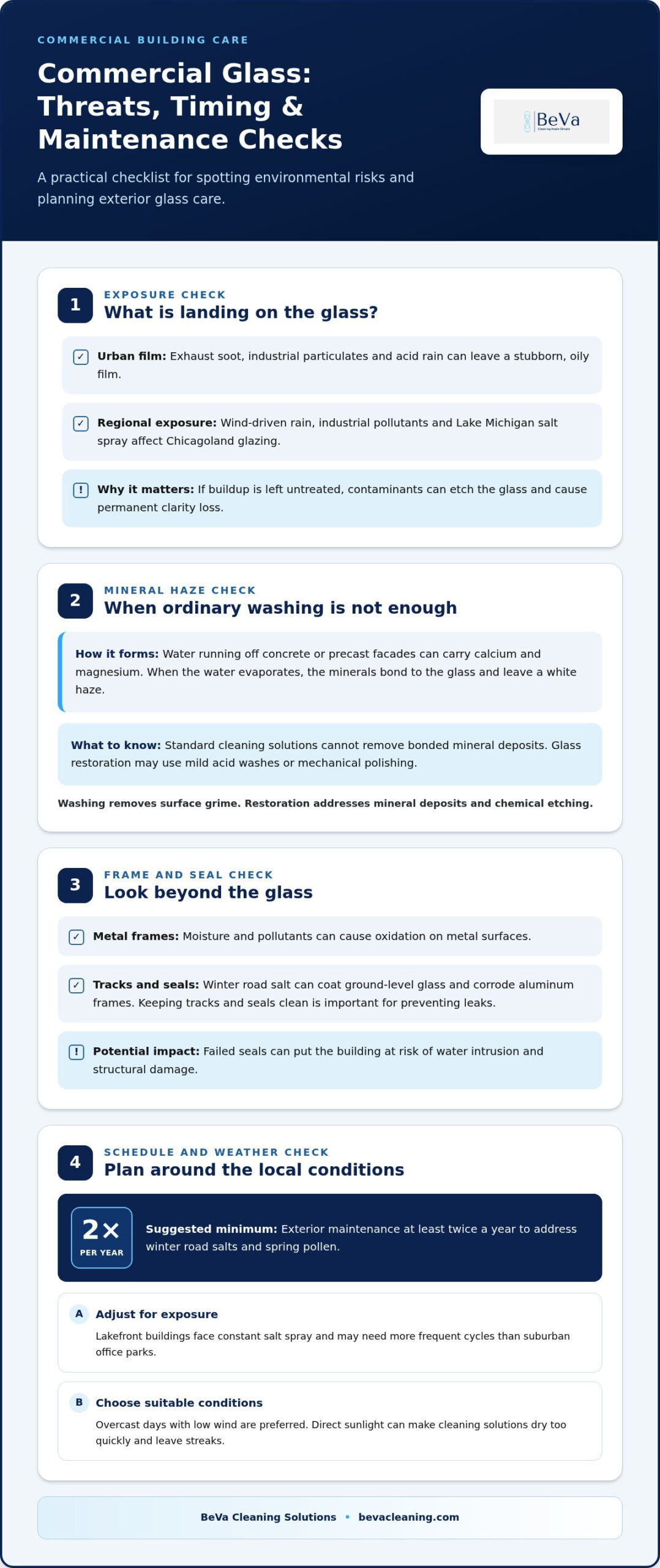
In the Chicagoland area, the environment is particularly harsh on commercial glazing. Wind-driven rain, industrial pollutants, and Lake Michigan salt spray create a corrosive film that compromises the clarity and strength of the windows. Regular professional care ensures these contaminants don’t lead to expensive glass replacement costs later. Understanding the window cleaning techniques and history used by professionals helps facility managers appreciate the complexity of modern high-access maintenance.
The Role of Curb Appeal in Asset Management
First impressions are the foundation of visitor trust and tenant retention. A building with streaky or salt-crusted windows signals neglect, which can subconsciously impact lease renewal discussions. Maintaining a "Class A" status requires a level of detail that only professional high-rise window cleaning can provide. In 2026, exterior building window cleaning is defined as a proactive preventative maintenance task designed to protect the structural integrity of the glass substrate while maximizing the property’s aesthetic value.
Frequency and Timing for Chicago Commercial Buildings
Chicago’s climate demands a strategic approach to scheduling. Buildings along the lakefront face constant salt spray, requiring more frequent cycles than suburban office parks. Ideally, exterior maintenance should occur at least twice a year to combat the buildup of winter road salts and spring pollen. The best results happen during overcast days with low wind, as direct sunlight can cause cleaning solutions to dry too quickly, leading to the very streaks you’re trying to avoid. By timing these services correctly, you remove the operational burden of reactive repairs and ensure your building remains a beacon of professional excellence.
Environmental Threats to Commercial Glass and Frames
Commercial glass surfaces are surprisingly porous at a microscopic level. This makes them vulnerable to a variety of environmental stressors that go far beyond simple dust. In urban environments, exhaust soot, industrial particulates, and acid rain create a stubborn, oily film. If this film isn’t addressed through routine exterior building window cleaning, it can begin to etch the glass surface, leading to permanent clarity loss. This degradation doesn’t just affect the view; it weakens the glass substrate over time.
Neglecting the frames and metal cladding surrounding the glass is equally risky. Moisture and pollutants cause oxidation on metal surfaces, which can lead to mechanical failure of seals and tracks. When seals fail, you risk water intrusion and structural damage that is far more expensive to fix than a cleaning service. Ensuring your maintenance plan aligns with OSHA safety standards allows these technical inspections and cleanings to happen safely at any height, protecting both your staff and your liability.
Hard Water and Mineral Etching
Hard water etching is a primary reason for glass restoration. When rainwater runs off concrete or pre-cast facades, it carries minerals like calcium and magnesium. As the water evaporates, these minerals bond chemically to the glass, creating a "white haze" that standard cleaning solutions cannot touch. Restoring these surfaces requires specialized techniques, such as mild acid washes or mechanical polishing. If you’ve noticed stubborn spotting that won’t go away, it’s often best to consult an expert in high-rise window cleaning to evaluate the damage before it becomes permanent.
Atmospheric Soiling in the Chicagoland Area
The Chicago and Northwest Indiana corridors, including areas like Munster and Dyer, present unique challenges for facility managers. Industrial zones contribute heavy metallic particulates that settle on ledges and frames. During the winter, road salt becomes airborne, coating ground-level glass and corroding aluminum frames. Regularly cleaning window tracks and seals is essential for preventing leaks during heavy Great Lakes storms. A proactive approach removes these contaminants before they can cause permanent degradation, providing a sense of tranquility for facility managers who want to avoid the operational burden of costly glass replacements.
Professional exterior building window cleaning requires a level of engineering and technical precision that standard janitorial cleaning services aren’t equipped to provide. While indoor janitorial teams excel at high-frequency surface maintenance, specialized exterior work involves managing complex high-access logistics and advanced water filtration systems. The transition from general maintenance to specialized glass care is a critical step in preserving a building’s structural integrity. Choosing the right method depends entirely on the architectural design and the specific pollutants present on the glass surface. Partnering with professional commercial cleaners who understand both interior and exterior demands ensures a cohesive, high-value maintenance strategy for your entire facility.
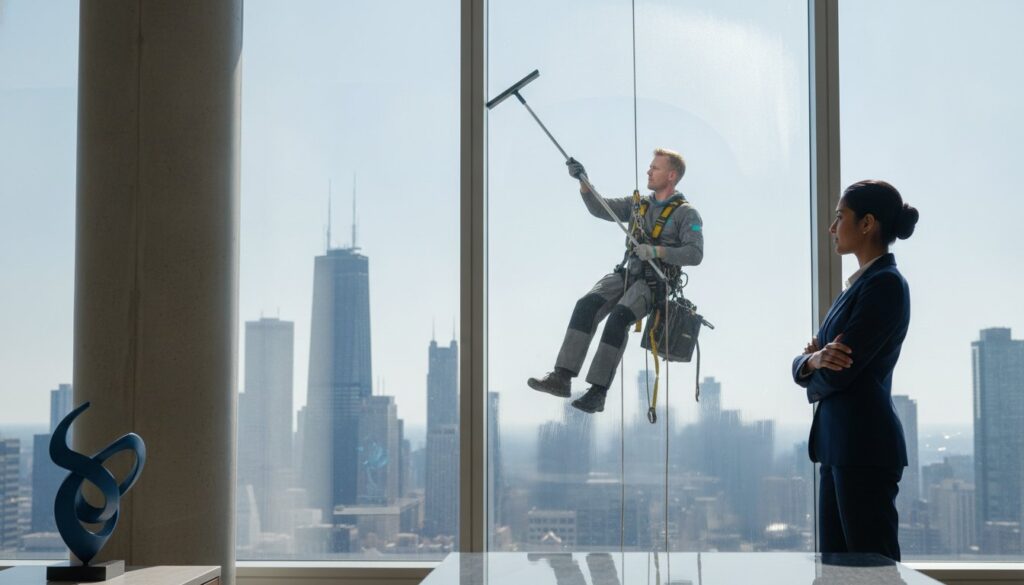
For mid-rise properties, water-fed pole systems are often the most efficient choice. These systems allow technicians to reach several stories from the safety of the ground while using purified water to ensure a spot-free finish. In contrast, traditional squeegee methods remain the superior choice for ground-level storefronts or intricate glass features where hand-cleaning allows for greater detail and precision. When buildings reach greater heights, the strategy shifts toward heavy equipment like boom lifts, scissor lifts, and specialized rope descent systems (RDS). This methodical approach ensures that every pane is treated with the specific care it requires to remain clear and resilient.
High-Access Logistics for Chicago High-Rises
Chicago’s skyline presents a unique set of challenges regarding Building Maintenance Units (BMU) and roof anchors. Modern glass architecture often requires rope access, also known as abseiling, to reach surfaces that mechanical lifts cannot access. It is vital for facility managers to ensure all anchor points are inspected annually and certified every ten years to maintain compliance. For more specialized insights on navigating these requirements, refer to our Chicago high rise window cleaning guide. Proactive planning in this area removes the operational burden and ensures the safety of everyone on site.
Water Purification and "Pure Water" Technology
The secret to a truly streak-free finish lies in water purification technology. Standard tap water contains minerals like calcium and magnesium that leave behind white spots as they dry. Professional teams use reverse osmosis and deionization (RO/DI) systems to strip these impurities away, creating "pure water" that acts like a magnet for dirt. This method offers significant environmental benefits because it eliminates the need for harsh chemical detergents. Using deionized water results in a more durable clean, as it leaves no soapy residue behind to attract new dust. This advanced approach provides the psychological peace of mind that your building will remain pristine for longer intervals.
Safety Standards and Maintenance Planning
Safety isn’t just a checklist; it’s the foundation of a dependable partnership. For facility managers, the risks associated with exterior building window cleaning involve more than just physical height. They encompass regulatory liability and the long-term health of the building’s workforce. Adhering to the ANSI/IWCA I-14.1 industry standard is essential, as it provides the most comprehensive framework for window cleaning safety in the United States. This standard, combined with strict OSHA compliance, ensures every descent is planned with precision and executed with the highest level of protection.
A Site-Specific Safety Plan (SSSP) is a non-negotiable requirement for any commercial project. This document identifies unique hazards, such as high-voltage lines, wind tunnels, or complex roof layouts, before work begins. By requiring a technical SSSP, you shift the burden of risk away from the property owner and onto the specialized contractor. This transition provides the psychological peace of mind that comes from knowing your liability is managed by experts who carry the appropriate professional insurance and safety certifications.
Regulatory Compliance for Facility Managers
Maintaining a compliant facility requires active oversight of your contractors’ safety records. You should regularly verify that your partners hold current certifications and have a history of clean safety audits. One of the most critical responsibilities is the management of roof anchors. Under OSHA 1910 regulations, facility managers must ensure all roof anchors are certified and inspected before any technician begins their descent. These anchors must undergo annual visual inspections and a full structural certification every ten years to remain legal for use.
Developing a Long-Term Maintenance Schedule
A proactive maintenance schedule balances your annual budget with the need for building preservation. Coordinating your exterior building window cleaning with other industrial cleaning services ensures a total approach to facility excellence. This coordination allows for a more efficient use of equipment like boom lifts and scaffolding, reducing the frequency of operational disruptions. Documenting every cleaning cycle is also vital for maintaining glass warranties on newer buildings, as many manufacturers require proof of professional care to honor their claims. For facilities that have recently undergone construction or renovation, pairing your window maintenance plan with a comprehensive post construction cleaning for warehouses Chicago protocol ensures that fine silica dust and construction particulates don’t compromise your newly installed glass surfaces. Protect your investment and your peace of mind by scheduling your next professional high-rise window cleaning with a partner who values integrity as much as you do.
Elevating Facility Excellence with BeVa Cleaning Solutions
At BeVa Cleaning Solutions, we believe that a building’s exterior is more than just glass and steel. It’s a reflection of your commitment to excellence and a vital component of your property’s long-term value. Our approach to exterior building window cleaning is rooted in a deep understanding of both the technical requirements and the psychological needs of modern facility managers. We don’t just act as a vendor; we position ourselves as a dependable partner. By integrating expert window care into a broader commercial cleaning strategy, we ensure that every aspect of your facility’s appearance and health is managed with professional authority.
Our team specializes in the complex, high-access environments that define the Chicago and Northwest Indiana skylines. Whether your property is a sprawling suburban office park or a downtown high-rise, we bring a results-oriented mindset to every project. We understand the unique environmental stressors of our region, from the salt spray of Lake Michigan to the industrial particulates found in our local corridors. Our goal is to remove the operational burden of maintenance from your shoulders, providing the tranquility that comes from knowing your building is in the hands of principled experts who value honesty and hard work.
The BeVa Difference: Transparency and Integrity
Transparency is the cornerstone of our service model. We follow a methodical approach to safety and results, ensuring that every step of our process is documented and clear. This eliminates ambiguity and builds the trust necessary for a long-term partnership. Local businesses in Munster, Crown Point, and Chicago trust our expertise because we deliver on our promises without compromise. We combine technologically advanced cleaning methods with traditional virtues, ensuring that our work supports the growth and health of the communities we serve. When you choose BeVa, you’re choosing a team that prioritizes social responsibility alongside technical proficiency.
Ready to Transform Your Building Exterior?
Every building envelope has its own set of challenges, and we’re prepared to meet them with a customized plan. Our process begins with a comprehensive consultation and site assessment to identify specific needs, from mineral deposit removal to high-access logistics. We evaluate your roof anchors, glass type, and surrounding environment to create a maintenance schedule that fits your budget and preservation goals. This proactive planning ensures that your building remains a "Class A" asset for years to come. Take the first step toward a clearer view and a more resilient property today. Contact BeVa Cleaning Solutions for a professional exterior assessment and experience the peace of mind that comes from true professional excellence.
Securing Long-Term Clarity for Your Commercial Facility
Mastering the complexities of exterior building window cleaning ensures that your property remains a "Class A" asset while protecting you from unnecessary liability. We’ve explored how specialized water purification technology prevents permanent mineral etching and why the latest OSHA rope descent standards matter for 2026. By shifting from reactive washing to a proactive preservation strategy, you remove the operational burden of glass replacement and provide a welcoming environment for every tenant and visitor.
BeVa Cleaning Solutions has spent years serving the Chicago and Northwest Indiana business communities with integrity and technical precision. Our crews are trained in general workplace safety and use specialized high-rise equipment to deliver results that go beyond surface-level aesthetics. Our team is ready to act as your dependable partner in maintaining a pristine, well kept building envelope. Get a Professional Quote for Your Exterior Building Cleaning today and experience the tranquility that comes from expert care. Your building deserves a partner who values excellence as much as you do.
Frequently Asked Questions
How often should a commercial building have its exterior windows cleaned?
Most commercial properties benefit from exterior building window cleaning two to four times per year. Factors like Lake Michigan salt spray and urban pollution in downtown Chicago may require more frequent maintenance to prevent etching. Suburban office parks might only need bi-annual service. Regular cleaning removes the operational burden of glass restoration by preventing mineral buildup before it bonds to the substrate. We recommend a customized schedule based on your building’s specific environmental exposure.
What is the difference between residential and commercial window cleaning?
Commercial window cleaning involves high-access logistics and rigorous safety standards that residential services don’t handle. While residential cleaners focus on small-scale aesthetics, commercial experts manage large glass envelopes using rope descent systems and heavy machinery. The primary difference lies in liability and compliance; commercial projects must adhere to OSHA 1910 regulations and ANSI/IWCA I-14.1 standards. This technical proficiency ensures that large-scale glass surfaces remain clear without compromising the safety of the facility or its tenants.
Is window cleaning included in standard janitorial contracts?
Standard janitorial cleaning usually focuses on interior surfaces and high-frequency floor care. Exterior building window cleaning is a specialized technical service that requires separate equipment and certifications. Most facility managers treat exterior glass maintenance as a distinct line item in their budget to ensure it’s handled by high-access experts. Integrating this specialized care with your broader facility strategy ensures total property excellence while keeping internal teams focused on their core daily cleaning responsibilities.
Can windows be cleaned in the rain or during Chicago winters?
Professional cleaning is possible in the rain because pure water technology prevents spotting; however, high winds or temperatures below 32 degrees Fahrenheit often pause operations. Chicago winters present unique challenges like ice on roof anchors and freezing lines. Safety remains our priority; we monitor weather patterns to ensure technicians only perform high-access work when conditions allow for total control. If weather delays a scheduled service, we coordinate closely to find the next available safe window.
What safety certifications should I look for in an exterior window cleaner?
You should look for contractors who strictly follow OSHA 1910 Subpart D and ANSI/IWCA I-14.1 safety standards. These certifications ensure the team is trained in fall protection, equipment inspection, and site-specific safety planning. Additionally, verifying specialized rope access certifications like SPRAT or IRATA is essential for high-rise properties. Choosing a partner with a documented safety record and comprehensive liability coverage provides the psychological peace of mind that your facility is protected from operational risk.
What causes hard water stains on exterior windows and can they be removed?
Hard water stains are caused by minerals like calcium and magnesium that leach from building facades and bond to the glass during evaporation. If left untreated, these deposits create a permanent "white haze" through chemical etching. Professional glass restoration techniques, including mild acid washes and mechanical polishing, can often remove these stains. It’s vital to address this early; regular maintenance cycles prevent these minerals from causing the structural degradation that eventually requires expensive glass replacement.
How do you clean windows on a building with no roof access?
For buildings without roof access, we utilize ground-based equipment like water-fed pole systems or mechanical lifts. Water-fed poles can reach up to 60 feet safely from the ground, using purified water for a streak-free finish. For higher elevations where roof anchors aren’t available, we deploy boom lifts or scissor lifts to provide stable access to the glass. This methodical approach ensures that even architecturally challenging buildings receive the same high-level care as traditional high-rises.
Does professional window cleaning include the frames and sills?
Yes, professional service should always include the cleaning of frames, sills, and tracks. Removing industrial soot and salt from these components prevents oxidation and mechanical failure of window seals. This comprehensive care is essential for maintaining the building envelope’s integrity and preventing water leaks. By ensuring that every part of the window assembly is cleaned, we help preserve the property’s aesthetic value and extend the lifespan of the hardware, removing a significant operational burden.