
The janitorial team you hired to save money might actually be your facility’s biggest hidden expense. When you factor in payroll taxes, workers’ compensation, and the constant cycle of turnover, the debate of commercial cleaning vs in-house janitorial staff becomes about much more than just a base hourly wage. You likely started your business to focus on growth and community impact, not to spend your afternoons interviewing cleaners or tracking down specialized floor equipment. The fully loaded cost of an in-house employee can be 25% to 40% higher than their base pay, creating a financial burden that often goes unnoticed until it’s too late.
We understand the pressure of maintaining a pristine environment while keeping operational costs predictable. It’s frustrating to manage the logistics of non-core employees when you’d rather enjoy the tranquility of a well-run facility. This 2026 comparison guide breaks down the critical differences in cost, quality, and liability to help you determine if outsourcing or hiring in-house is the right move for your building. We’ll explore how shifting to a professional service can eliminate management headaches, reduce your OSHA liability risks, and provide the consistent, high-standard results your brand deserves.
Key Takeaways
- Understand the “Total Cost of Ownership” beyond base wages, including the hidden financial markups on payroll taxes, benefits, and workers’ compensation.
- Navigate the complexities of commercial cleaning vs in-house janitorial staff by weighing daily oversight needs against the peace of mind offered by professional quality assurance.
- Gain access to industrial-grade equipment and specialized technical training for high-stakes tasks like hard floor maintenance and high-rise window cleaning.
- Reduce your HR and operational burden by offloading the constant cycle of staff turnover and supply procurement to a dependable partner.
- Learn how to assess your specific facility type to choose the service model that ensures consistent, professional-grade results and long-term tranquility.
Understanding the Choice: In-House Staff vs. Commercial Cleaning Services
Deciding how to manage your facility’s hygiene is a pivot point for your operational efficiency. On one side, you have the in-house model where you directly employ individuals as part of your internal team. On the other, you have specialized service contracts with external partners. This choice between commercial cleaning vs in-house janitorial staff is no longer just about who holds the mop; it’s about where you want your leadership team to spend their energy. In 2026, the labor market has shifted significantly. With the median salary for janitors at $35,930 and fully loaded costs reaching 40% higher after benefits and taxes, many Chicago and Northwest Indiana business owners are re-evaluating their strategy. This Commercial cleaning overview highlights how the industry has evolved into a high-tech service sector that requires more than just basic labor.
Initial considerations often start with your facility size and security requirements. A small boutique office has different needs than a high-security medical facility or a sprawling warehouse. Specialized needs, such as hard floor maintenance or post-construction cleaning, also dictate the level of expertise required. Beyond the logistics, your choice impacts your company culture. Managing a cleaning crew internally requires a specific set of management skills that can distract from your core business goals. Outsourcing allows you to reclaim that mental space, ensuring your focus remains on growth while the environment remains pristine.
The In-House Model: Control and Integration
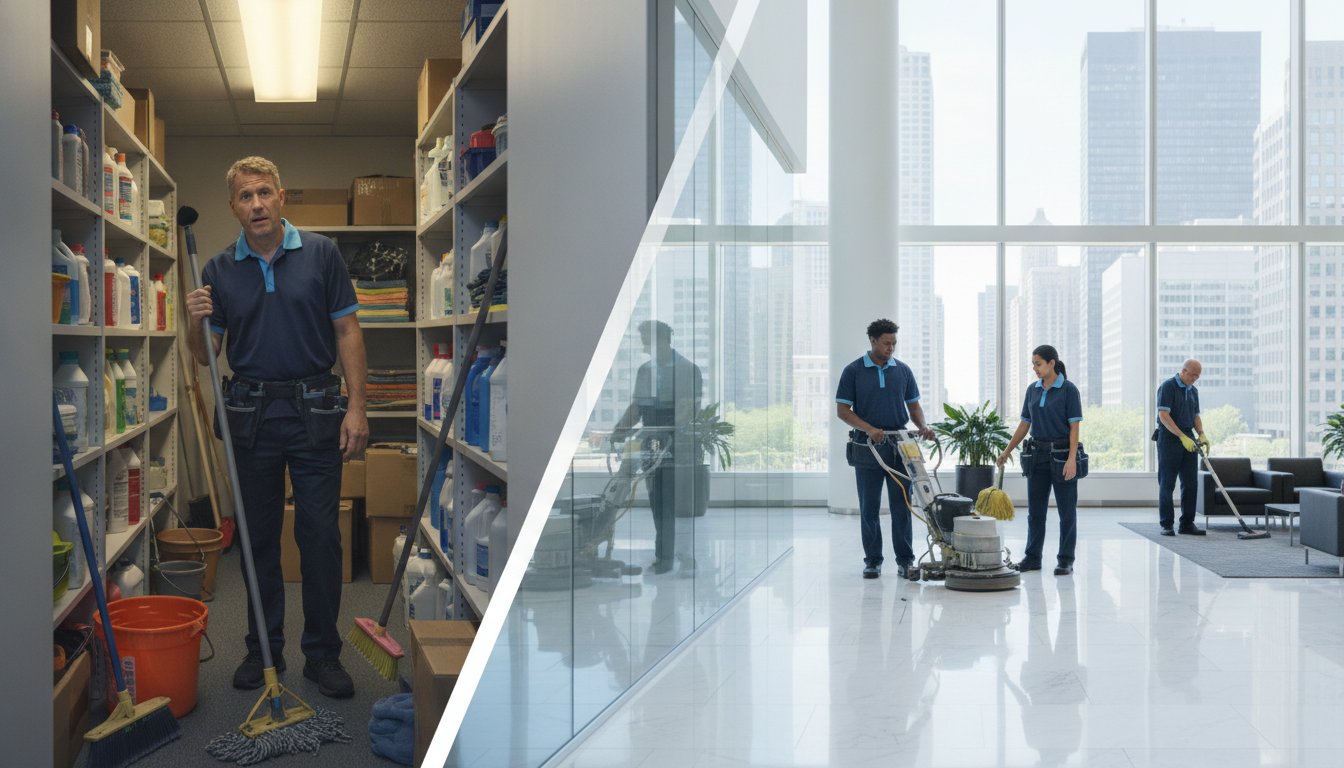
Hiring internally allows cleaners to become a genuine part of your company culture. They understand the specific nuances of your building, from which door sticks to the preferred layout of the conference room. This model provides an immediate response for unplanned spills or urgent requests during the workday. However, it also places the burden of recruitment, training, and OSHA compliance directly on your shoulders. You aren’t just managing a facility; you’re managing a small HR department for non-core employees. This includes handling high turnover rates and the constant need for backup coverage when a staff member calls in sick.
The Commercial Service Model: Expertise and Scalability
Partnering with a professional vendor transfers the management headache to experts who live and breathe facility maintenance. For instance, Advance Cleaning Services Inc. provides comprehensive cleaning solutions in Alberta and the Vancouver area, ensuring that businesses can scale their operations without the stress of managing an internal crew. You gain instant access to industrial-grade equipment and specialized chemicals that an in-house team rarely possesses. This model is highly scalable. Whether you need a dedicated day porter for daytime support or a crew for high-rise window cleaning, a professional service adjusts to your needs without you having to post a single job ad. It creates a narrative of comprehensive care, where the technical details of environmental health are handled with professional-grade precision, leaving you with a sense of tranquility and a predictable monthly budget.
The Pros and Cons of Maintaining an In-House Janitorial Team
Maintaining an internal team offers a level of integration that external vendors sometimes struggle to match. Your staff develops a deep familiarity with the building. They know exactly which rooms need extra attention after a Monday morning meeting or where the sensitive electrical panels are located. Often, these employees become a “jack-of-all-trades,” pivoting from emptying bins to fixing a leaky faucet or moving furniture. This versatility can feel like a major asset for a facility manager looking for a flexible, on-site presence that feels like part of the family.
However, the weight of this model rests heavily on your administrative shoulders. When comparing commercial cleaning vs in-house janitorial staff, you have to account for the constant cycle of recruitment and training. High turnover rates in the service industry mean you’re often perpetually interviewing. You also carry the full responsibility for chemical handling and safety compliance. If an employee improperly mixes solutions or fails to use personal protective equipment, the legal and health consequences land squarely on your business. It’s a significant risk that requires constant vigilance.
The Hidden HR Burden
Managing a cleaning crew involves more than just a paycheck. You’re responsible for covering sick days, coordinating vacations, and reacting to unexpected “no-shows” that leave your facility unkempt. The time spent background-checking new hires and processing payroll for non-core employees is time stolen from your primary business objectives. Many facility managers find that 12 Warning Signs Your Office Needs a Professional Cleaning Service in 2026 often begin with these small, recurring staffing gaps. These interruptions eventually lead to a decline in overall building health and a rise in management frustration.
Training and Liability Gaps
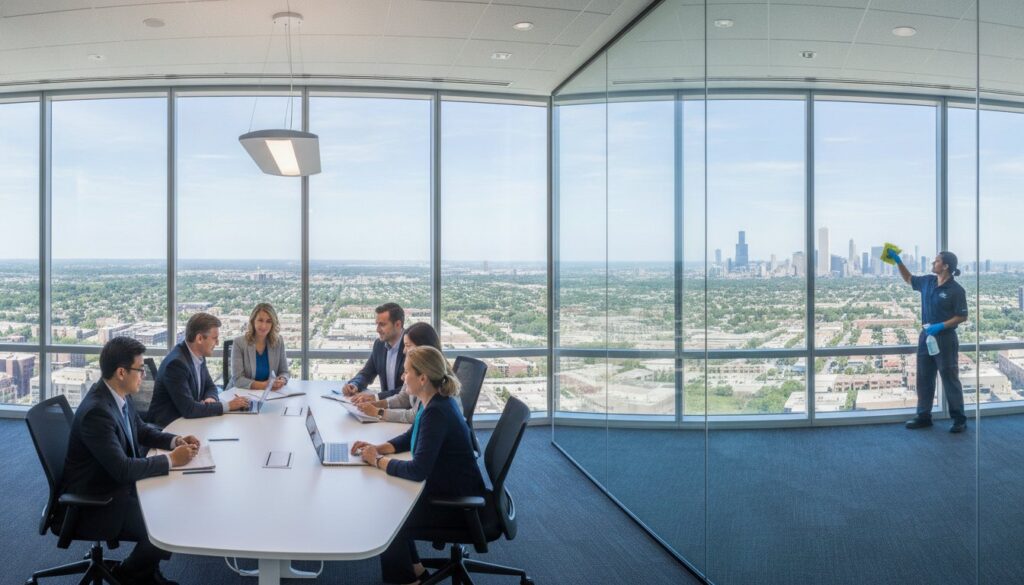
Safety is a significant variable in the cleaning industry. In-house staff often lack the specialized technical training required for high-risk tasks, such as high-rise window cleaning or post-construction debris removal. Without rigorous adherence to OSHA cleaning industry standards, your company is exposed to substantial liability risks. A single serious violation of safety protocols can result in penalties up to $16,550 as of 2026. Beyond the fines, workplace injuries can lead to costly workers’ compensation claims. Without expert knowledge of floor care, an untrained employee might also accidentally damage expensive hard floor surfaces using the wrong chemicals. To protect your investment and ensure a safe environment, you might consider how our janitorial cleaning services provide a layer of professional protection that an internal team simply cannot offer.
Why Businesses Outsource: The Advantages of Professional Commercial Cleaning
The choice between commercial cleaning vs in-house janitorial staff often becomes clear when you shift your focus from hourly wages to operational results. Professional vendors operate with systematic precision, using quality assurance checklists and supervisor audits that internal teams rarely replicate. This structured approach ensures that every corner of your facility meets a high standard, every single night. You no longer have to worry if the trash was emptied or if the restrooms were sanitized; the system handles the accountability for you. This transition allows you to move from a state of constant micro-management to a place of professional tranquility.
This level of systematic precision is common among top-tier providers; for instance, AlphaLux Cleaning provides residential and commercial clients in New York with the same type of reliable, high-standard service that eliminates management headaches.
Similarly, for those seeking these high standards in the Middle East, you can visit Extra Hand Cleaning Services for professional apartment and house cleaning in Abu Dhabi and Dubai.
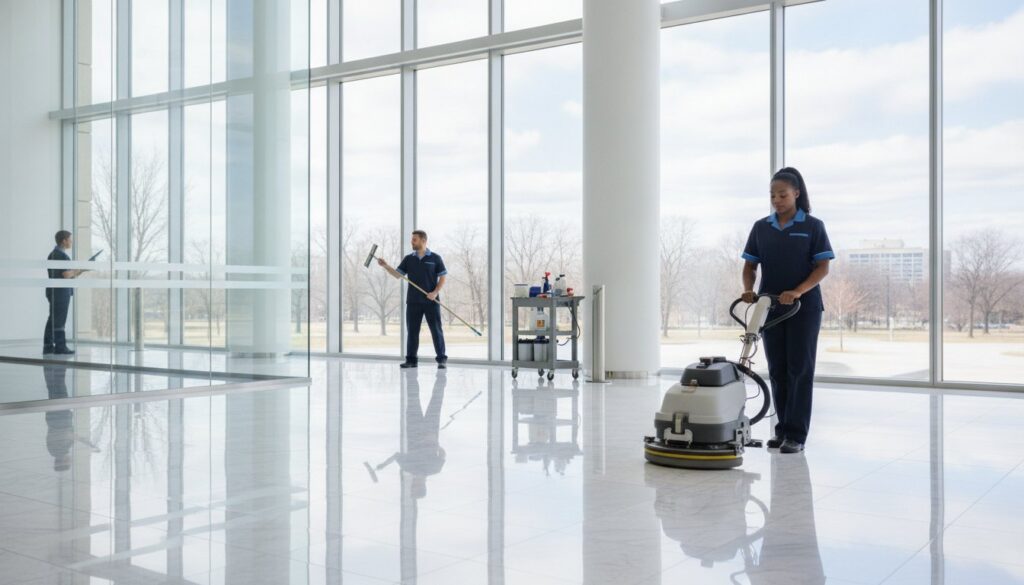
Outsourcing also removes the logistical weight of supply management. Your cleaning partner brings the industrial-grade chemicals, HEPA-filtered vacuums, and high-speed floor scrubbers required for a deep clean. This eliminates the need for you to track inventory or maintain expensive machinery. Perhaps most importantly, a professional service provides a comprehensive transfer of liability. The vendor carries the burden of workers’ compensation and general liability insurance. If an accident occurs during a cleaning shift, your business is protected from the direct financial and legal fallout.
The Hybrid Solution: Day Porter Services
Many facility managers worry that outsourcing means losing the “on-call” nature of an internal employee. Our day porter services bridge this gap perfectly. A day porter provides the immediate, in-house feel of a dedicated staff member while remaining under our professional management. They maintain high-traffic areas in real-time, responding to spills and restocking restrooms during business hours. For high-traffic Chicagoland offices and medical facilities, this hybrid model ensures the building stays pristine without adding a single person to your internal payroll.
Technical Excellence and Specialized Equipment
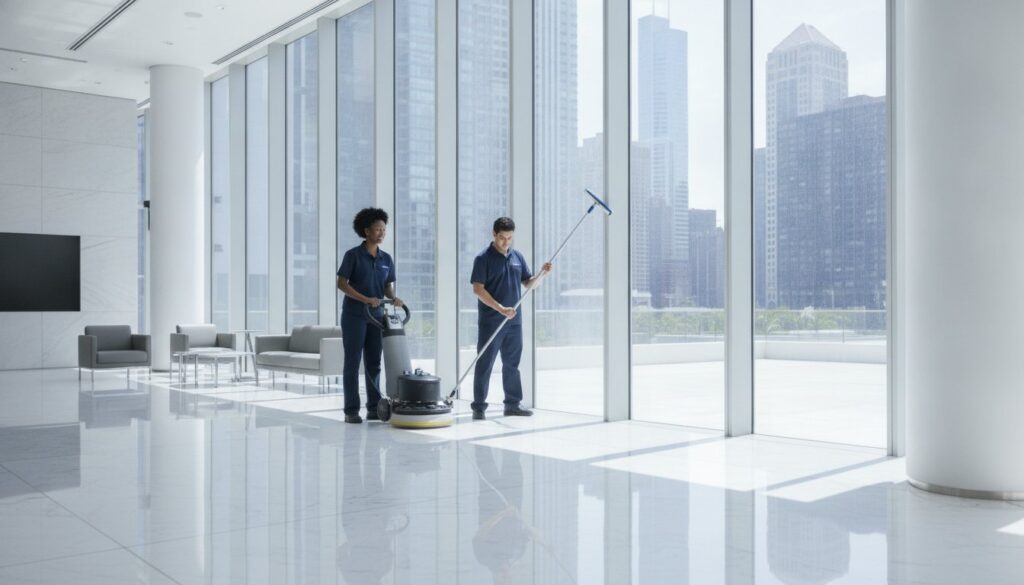
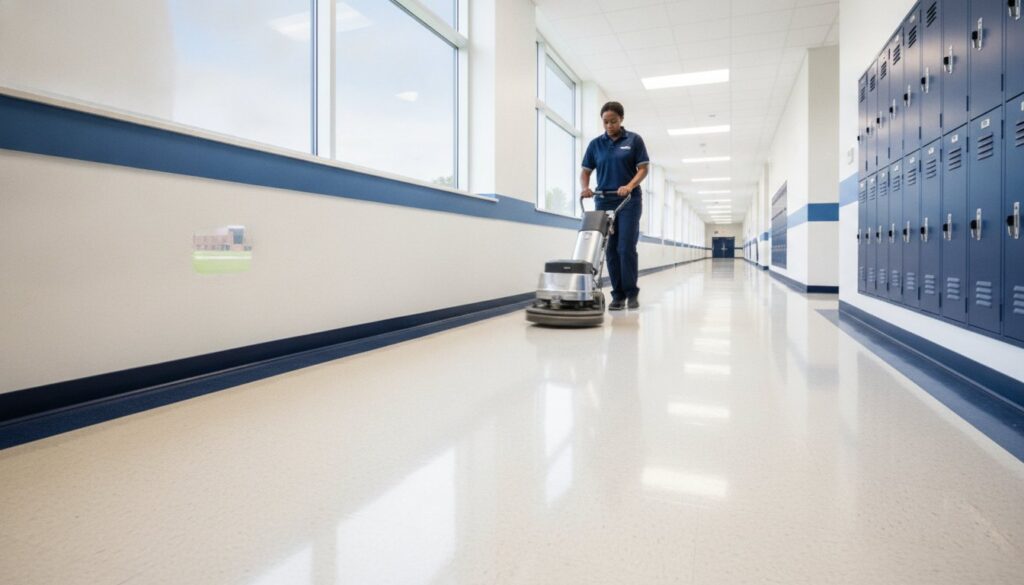
Specialized tasks require more than just a standard janitor with a mop bucket. Projects like post construction cleaning in Chicago require technical knowledge of dust suppression and debris removal that goes far beyond daily maintenance. Professional crews receive regular training updates on the latest EPA regulations and chemical safety protocols. They arrive equipped with specialized tools, such as floor scrubbers for hard floor services and high-reach equipment for window care. This level of technical excellence ensures your facility’s long-term health and protects the significant investment you’ve made in your building’s infrastructure.
The Financial Reality: Comparing Costs and ROI
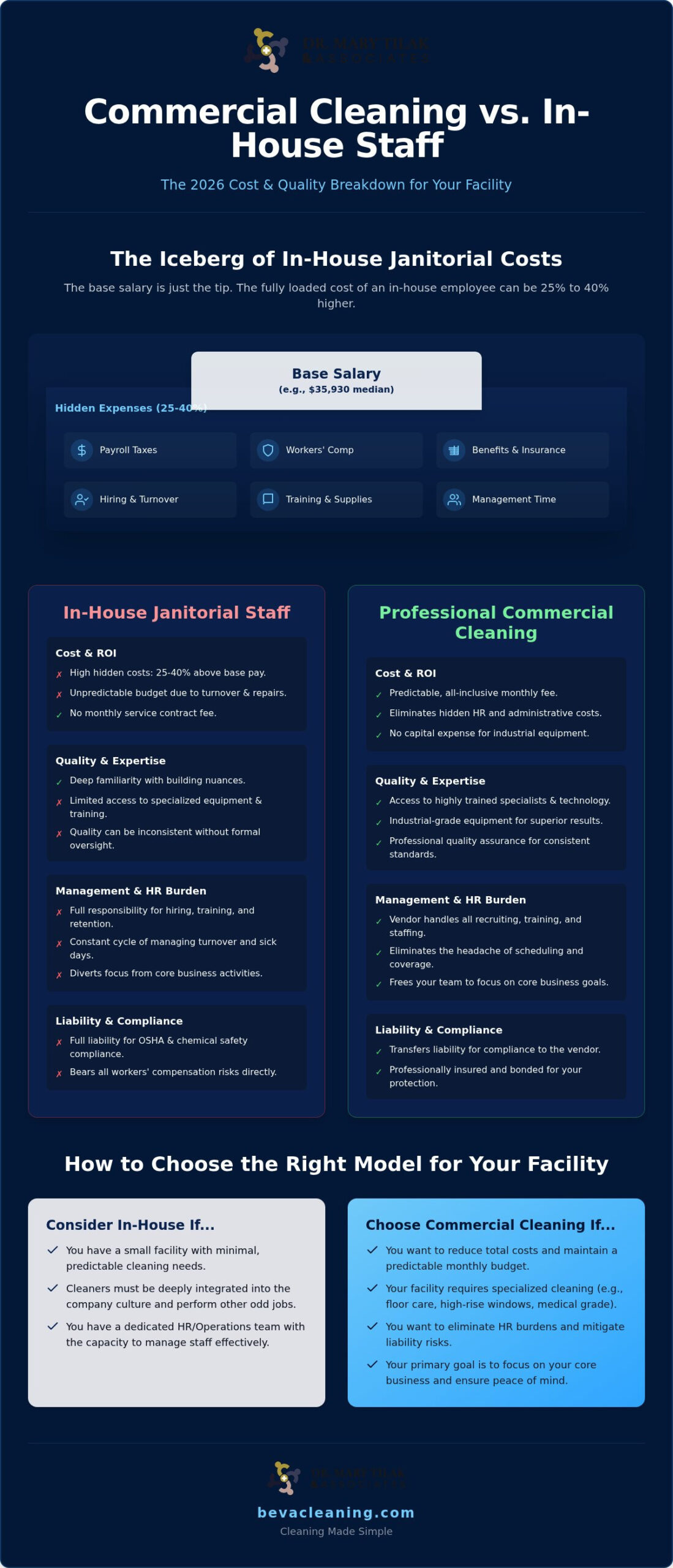
Many facility managers look at the median hourly wage of $17.27 for a janitor and assume that hiring internally is the most economical path. This is a common trap in the commercial cleaning vs in-house janitorial staff debate. The sticker price of a salary is only the beginning of the financial story. To understand the true impact on your bottom line, you must calculate the Total Cost of Ownership (TCO). When you factor in payroll taxes, health insurance, 401k contributions, and workers’ compensation, the fully loaded cost of an in-house employee is typically 25% to 40% higher than their base pay. These hidden markups turn a seemingly low hourly rate into a significant monthly liability.
Beyond personnel, the cost of specialized equipment adds another layer of financial complexity. Owning high-quality floor buffers, HEPA-filtered vacuums, and industrial scrubbers requires a large upfront capital investment. These machines aren’t static assets; they require ongoing maintenance, repairs, and eventually, replacement as they depreciate. When you partner with a professional service, these capital expenditures vanish from your balance sheet. You pay for the result, not the machinery, allowing you to reallocate that capital toward your core business growth.
Direct vs. Indirect Expenses
Analyzing your budget requires looking at both direct and indirect expenses. Direct costs are easy to track: wages, cleaning chemicals, and paper products. However, the indirect “Management Tax” is what often drains a facility’s resources. This includes the time your facility manager spends interviewing candidates, processing background checks, and supervising daily tasks. A professional cleaning contract provides a flat, predictable monthly fee. This transparency eliminates the volatility of fluctuating labor costs and overtime, making your annual budgeting process simple and stress-free.
Risk Mitigation and Insurance
Financial health is as much about avoiding losses as it is about managing expenses. Professional services provide a robust shield against the high costs of OSHA violations, which can reach $16,550 for a single serious infraction in 2026. By outsourcing, you also benefit from the cleaning company’s umbrella liability policy. This protects your business from the financial fallout of workplace accidents or property damage. We believe that true “operational tranquility” is the primary ROI of a commercial cleaning Chicago partnership, as it removes the fear of unexpected legal or regulatory expenses. If you are ready to stabilize your facility costs and remove the management burden, consider requesting a quote for our commercial janitorial services to see the difference a professional partner makes.
Making the Right Choice for Your Facility
Choosing between commercial cleaning vs in-house janitorial staff isn’t a one-size-fits-all decision; it requires an honest look at your building’s unique demands. A sprawling warehouse has vastly different requirements than a high-stakes medical office or a corporate headquarters. While a warehouse might prioritize debris removal and floor durability, a healthcare facility demands clinical-grade disinfection and strict adherence to hygiene protocols. You must also evaluate the technical complexity of your space. If your facility features high-rise windows or expensive stone flooring, the specialized equipment and technical training of a professional partner become essential to protecting your physical assets.
Beyond the physical space, assess your own management bandwidth. Directing an internal crew means you’re responsible for every training session, every equipment repair, and every performance review. If your schedule is already stretched thin, adding the role of “Janitorial Supervisor” might not be the best use of your leadership energy. At BeVa Cleaning Solutions, we provide the professional authority of a large-scale vendor while maintaining the warm, community-focused feel of a local partner. We aim to return your focus to your primary mission by handling the operational details that often cause the most friction.
Deciding Factors for Chicago and Northwest Indiana
The local labor market in 2026 presents unique challenges for facility managers. Finding reliable, long-term in-house help has become increasingly difficult as the service industry shifts toward specialized contract work. This scarcity of talent often leads to high turnover and inconsistent standards that can damage your company’s professional image. Compliance requirements are also tightening, particularly in food manufacturing and healthcare sectors. Consulting with a commercial cleaning Munster Indiana expert can help you audit your specific needs and ensure you stay ahead of regional regulatory changes without the stress of self-management.
Transitioning to a Professional Service
Moving from an in-house model to an outsourced partnership doesn’t have to be disruptive. A successful transition starts with clear Service Level Agreements (SLAs) that define exactly what success looks like for your facility. These agreements ensure accountability and provide a roadmap for consistent results. We work closely with you to map out your facility’s specific nuances, ensuring our team hits the ground running from day one. By offloading the logistical burden, you gain more than just a clean building; you gain the tranquility of knowing your environment is in expert hands. Ready to offload the management headache? Contact BeVa Cleaning Solutions for a facility audit and discover how we can streamline your operations.
Elevate Your Facility Standards for 2026
The choice between commercial cleaning vs in-house janitorial staff ultimately defines how much energy you spend on maintenance instead of your core mission. By moving away from the hidden costs of direct employment, you gain predictable monthly budgets and professional-grade results. You also shed the weight of HR management and the constant cycle of staffing gaps. Partnering with a specialized team ensures your facility benefits from industrial-grade equipment and technical expertise that an internal staff rarely possesses.
We are here to serve as your dependable partner across Chicago and Northwest Indiana. Whether you need specialized care for high-rise windows or the final polish of a post-construction cleanup, our focus remains on operational transparency. Let us help you remove the management headache and restore a sense of tranquility to your professional environment. You deserve a facility that reflects your commitment to excellence without the administrative burden. Request a Professional Facility Assessment from BeVa Cleaning Solutions today and take the first step toward a cleaner, more efficient future.
Frequently Asked Questions
Is commercial cleaning more expensive than hiring an in-house janitor?
Professional services are often more cost-effective because the flat monthly fee covers expenses that are hidden in an in-house budget. When weighing commercial cleaning vs in-house janitorial staff, you must account for the 25% to 40% markup on base wages for payroll taxes and benefits. You also avoid the capital investment required for industrial equipment. A contract model provides predictable costs, ensuring your facility budget remains stable without the surprise of overtime or emergency repairs.
What are the main risks of hiring in-house cleaning staff?
The primary risks involve high turnover rates and significant liability for safety compliance. Managing an internal team means your business is directly responsible for OSHA standards, where a single serious violation can result in a $16,550 fine as of 2026. You also face the operational risk of “no-shows” and the constant administrative burden of recruitment. Outsourcing transfers these risks to a professional partner, protecting your business from the legal and financial fallout of workplace accidents.
Can a commercial cleaning service provide the same level of security as in-house staff?
Professional cleaning services often provide a higher level of security through rigorous, documented background checks and bonding. Unlike informal internal hiring processes, a reputable vendor uses standardized vetting procedures and electronic time-tracking to monitor facility access. This creates a clear digital trail of who is in your building and when. Supervisory audits add another layer of protection, ensuring that security protocols are followed consistently every night, giving you total peace of mind.
What specialized equipment do commercial cleaners have that in-house teams lack?
Professional crews utilize industrial-grade tools such as high-speed floor scrubbers, HEPA-filtered vacuums, and specialized high-reach window cleaning equipment. These machines are essential for maintaining facility health, especially since floor care represents nearly 44% of the cleaning market’s focus in 2026. Most in-house teams rely on basic residential-grade tools that fail to provide a deep clean, whereas specialists like Gutter Wiz utilize advanced systems for exterior surfaces. Access to this specialized technology ensures your facility surfaces are preserved and sanitized to a professional standard without you buying the machinery.
How do I manage the transition from in-house staff to a professional cleaning company?
A successful transition starts with a comprehensive facility audit to define your specific Service Level Agreements (SLAs). You should establish a clear hand-off date and communicate the new protocols to your internal departments. During this phase, the choice between commercial cleaning vs in-house janitorial staff becomes a bridge to better management. We recommend a staggered implementation where the professional team shadows the existing routine to capture building nuances before taking full operational control of the space.
Does a commercial cleaning service offer daytime support like an in-house janitor?
Yes, day porter services are designed specifically to provide the “on-call” support typical of an internal employee. A day porter stays on-site during your business hours to restock restrooms, manage high-traffic spills, and maintain common areas. This service offers the immediate response you need for a busy office or medical facility while keeping the staff under professional management. It’s the ideal hybrid solution for businesses that want an active presence without the HR headaches of direct employment.
What should be included in a commercial cleaning contract to ensure accountability?
A robust contract must include a detailed scope of work, a schedule for quality assurance audits, and clear communication protocols. Transparency is the foundation of a good partnership. Ensure your agreement specifies the frequency of deep-cleaning tasks, such as hard floor services, and outlines how the vendor handles staffing emergencies. This structured approach eliminates ambiguity and ensures that the cleaning standards you expect are met consistently, allowing you to focus on your core business goals.
How does outsourcing cleaning impact my business liability insurance?
Outsourcing typically reduces your liability exposure by transferring the risk of workplace injuries to the cleaning company’s insurance policy. The vendor carries their own workers’ compensation and general liability coverage, which shields your business from direct claims. This transfer is particularly valuable in high-risk scenarios like post-construction cleanup or high-rise window care. By ensuring your partner is fully insured and bonded, you lower your company’s risk profile and potentially reduce your own insurance premiums over time.