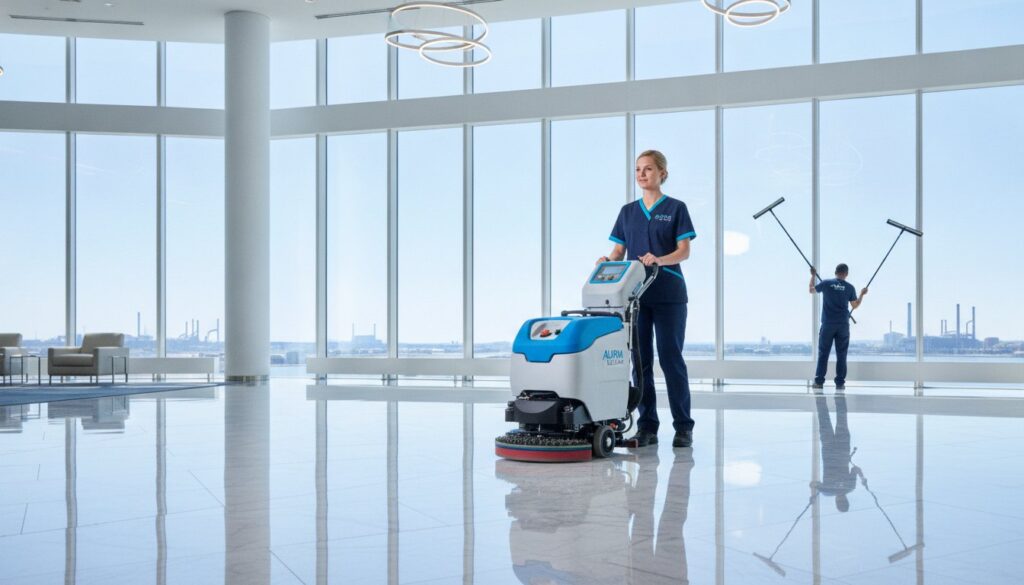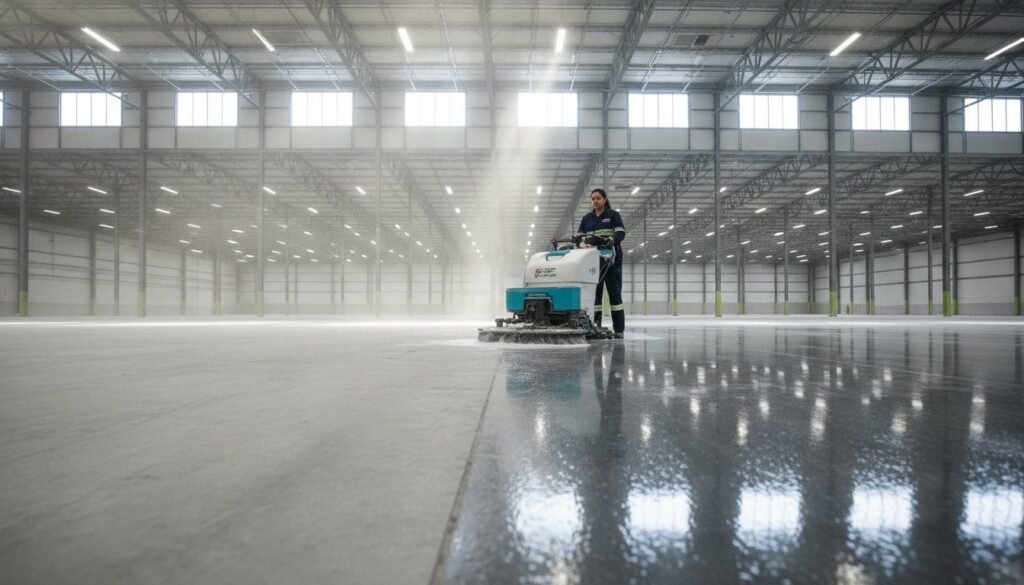

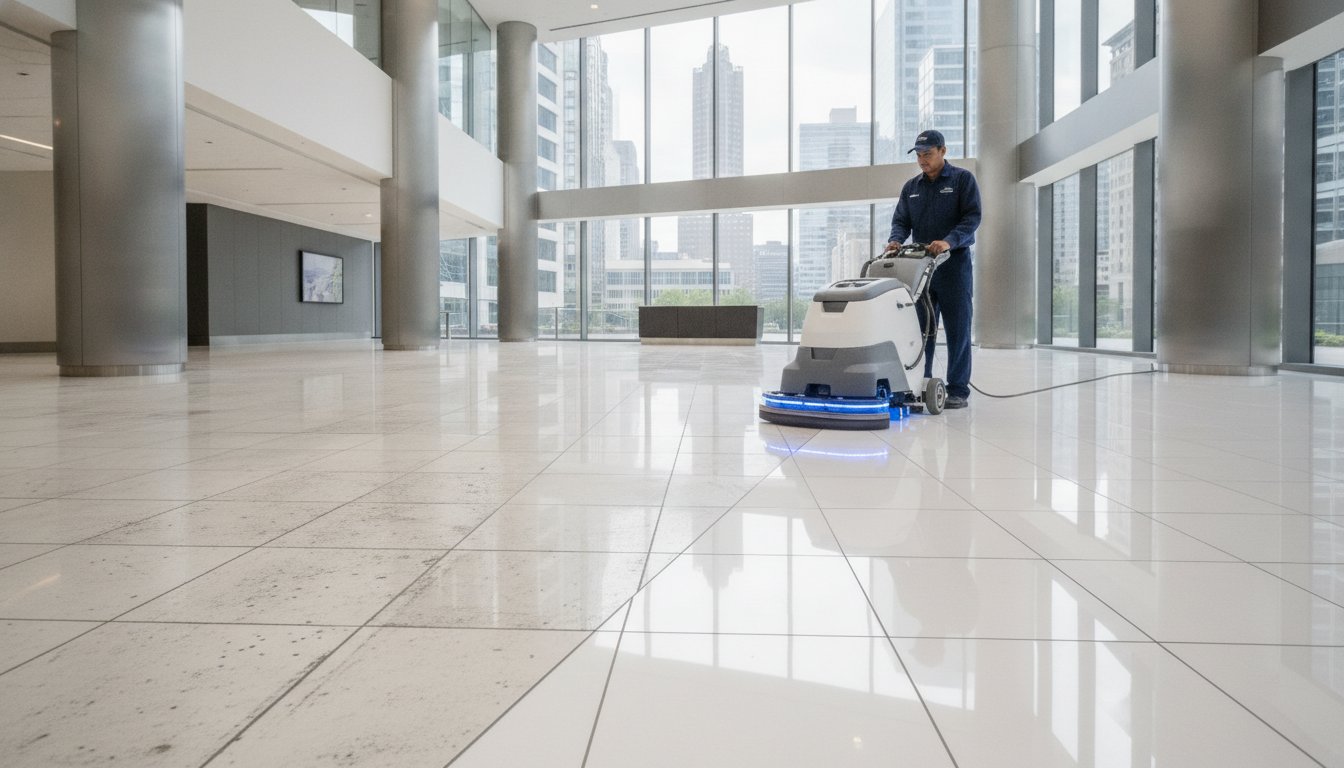
If your janitorial team mops every night, why does the grout in your high-traffic corridors still look dark and dingy? For many facility managers in Northwest Indiana and Chicago, the sight of persistent odors and recurring discoloration is a constant source of frustration. You aren’t alone in feeling that standard maintenance just isn’t cutting it anymore. It’s exhausting to manage a cleaning schedule that seems to yield diminishing returns while slip-and-fall concerns continue to climb.
At BeVa Cleaning Solutions, we understand that your floors are a significant business asset, not just a surface to walk on. This guide explores how professional commercial tile and grout cleaning goes beyond the mop bucket to provide true restorative care. We’ll show you how to eliminate those deep-seated contaminants that harbor bacteria and cause odors. By the end of this article, you’ll discover how to restore your floor’s original aesthetics, ensure your facility meets safety standards, and extend the lifespan of your surfaces through specialized, high-performance care. We believe in removing operational burdens so you can focus on the growth and health of your community.
Key Takeaways
- Understand why traditional mopping often fails to remove deep-seated contaminants from porous grout and how it can lead to permanent discoloration.
- Compare the effectiveness of high-pressure hot water extraction against mechanical scrubbing to determine the best restorative approach for your specific floor type.
- Learn how a strategic investment in professional commercial tile and grout cleaning reduces slip-and-fall risks and ensures your facility remains OSHA-compliant.
- Discover specialized techniques for neutralizing the damaging effects of Chicago and Northwest Indiana road salts and winter slush on your high-traffic entryways.
- Find out how to integrate restorative care with daily janitorial services to simplify maintenance, extend floor life, and preserve your brand’s professional image.
The Science of Porosity: Why Commercial Mopping Fails
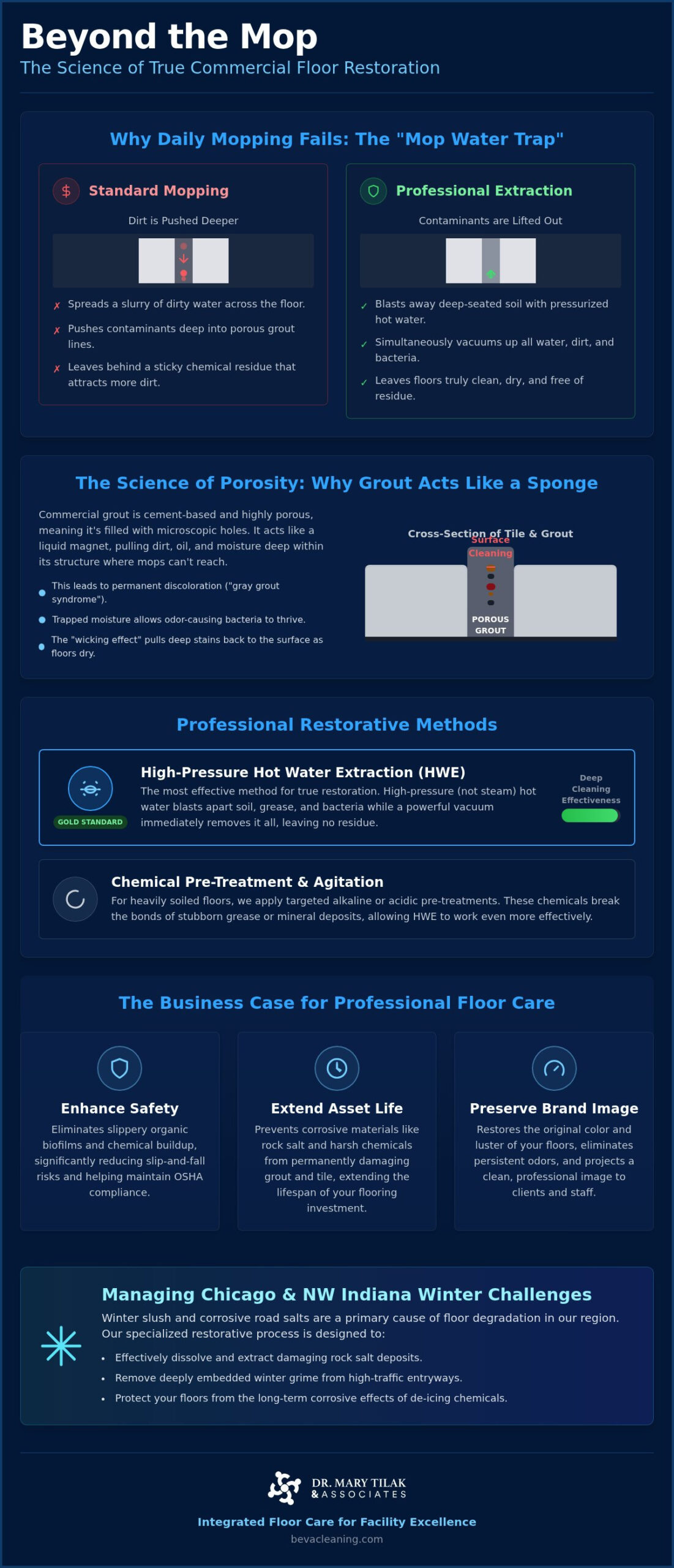
Facility managers often wonder why their floors look aged and dingy despite a rigorous daily cleaning schedule. The answer isn’t usually found in the lack of effort from your team, but in the microscopic structure of the floor itself. Most commercial grout is cement-based, which makes it a highly porous material. On a molecular level, it acts like a liquid magnet. It pulls in moisture, oils, and dirt from the surface and traps them deep within its matrix. This creates a cycle where your floors never truly feel clean, no matter how often they are scrubbed.
Understanding Grout as a Porous Material
In high-traffic commercial zones, you’ll typically encounter sanded grout. This material has larger pores than the unsanded variety, making it even more susceptible to absorbing contaminants. In a typical Northwest Indiana facility, these contaminants often include grease from food service, rock salt from winter foot traffic, and organic biofilms. Because these substances sit deep inside the grout matrix, standard surface-level cleaners cannot penetrate far enough to reach them. Over time, this leads to sub-surface contamination. This isn’t just an aesthetic issue; it’s a hygiene concern. Microscopic bacteria thrive in these damp, protected pores, leading to persistent odors in restrooms and kitchens that air fresheners simply can’t mask. Professional commercial tile and grout cleaning is necessary to reach these hidden layers.
The Failure of Standard Janitorial Mopping
Standard mopping is often the primary cause of “gray grout” syndrome. When a janitorial crew uses a mop, they are often spreading a slurry of dirty water across the floor. As the mop passes over the grout lines, which are the lowest points of the floor, the dirty water settles there. Instead of lifting the soil, the mopping process effectively pushes it deeper into the pores. This is the “mop water trap.”
- Chemical Buildup: Improper soap dilution leaves a sticky residue behind. This film acts like an adhesive, grabbing new dirt and locking it onto the surface.
- The Wicking Effect: You may notice that stains seem to disappear when the floor is wet, only to reappear as it dries. This is wicking, where moisture deep in the grout evaporates and pulls liquefied soil back to the surface.
- Biofilm Development: Constant dampness from mopping without proper extraction encourages the growth of slippery organic films.
Relying on traditional mopping alone can compromise your commercial tile and grout cleaning goals. Without specialized extraction, you are merely managing the surface while the core of the floor continues to degrade. Transitioning from basic maintenance to restorative care is the only way to remove these operational burdens and restore the tranquility of a truly clean environment.
Restorative Methods: Professional Extraction vs. Surface Scrubbing
Restorative care isn’t a one-size-fits-all process. While daily janitorial maintenance keeps the surface clear, true restoration requires equipment that can penetrate the grout’s molecular structure we discussed previously. Choosing the right method depends entirely on the soil type, tile texture, and the specific environment of your Northwest Indiana facility. We focus on methods that don’t just clean the surface but actually remove the operational burden of failing floors.
High-Pressure Hot Water Extraction (HWE)
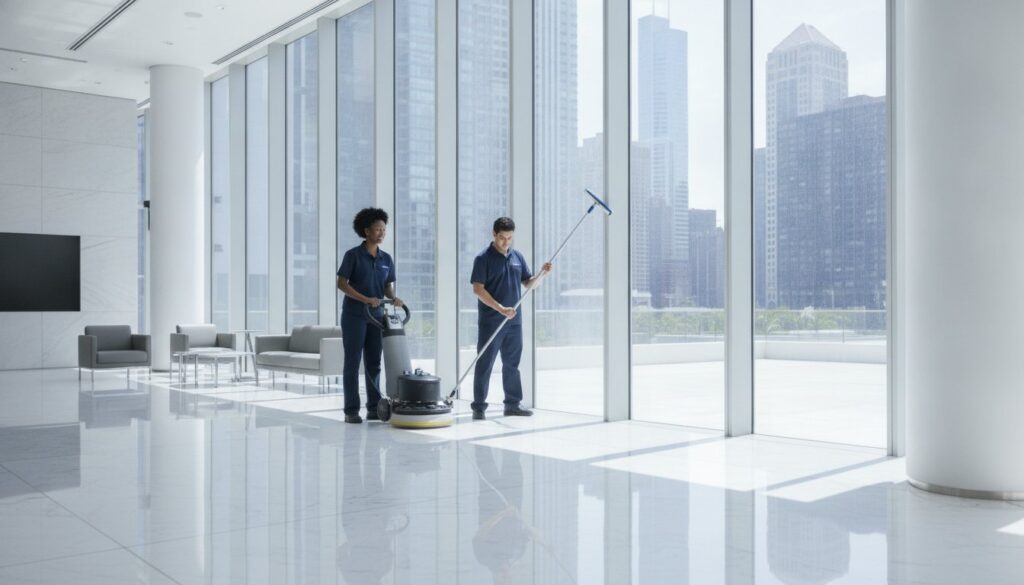
HWE is the gold standard for commercial tile and grout cleaning in high-traffic areas like lobbies and hallways. This method uses specialized tools that blast hot water into the grout lines at high pressure. The heat is a critical component because it breaks the chemical bonds of stubborn commercial grease and organic matter that cold water can’t touch. Unlike a mop, which leaves the floor soaking wet, HWE uses a simultaneous spray-and-vac process. This ensures zero residue is left behind, leaving your floors dry and safe for immediate use. If you’re looking to revitalize your facility’s appearance, our hard floor services provide the deep extraction needed for professional results.
Chemical Pre-Treatment and Agitation
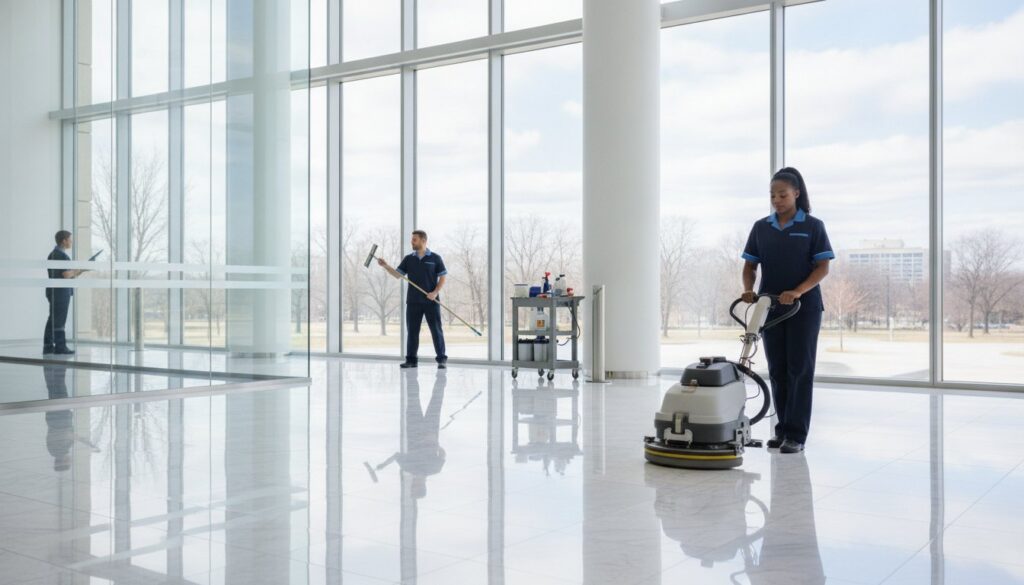
Extraction alone isn’t always enough for severely neglected floors. We begin by applying targeted chemical pre-treatments. We typically use alkaline emulsifiers to lift heavy organic soil loads or mild acidic solutions to dissolve mineral deposits and rock salt. Once the chemicals have had proper dwell time, mechanical agitation is required to loosen the debris from the tile’s texture.
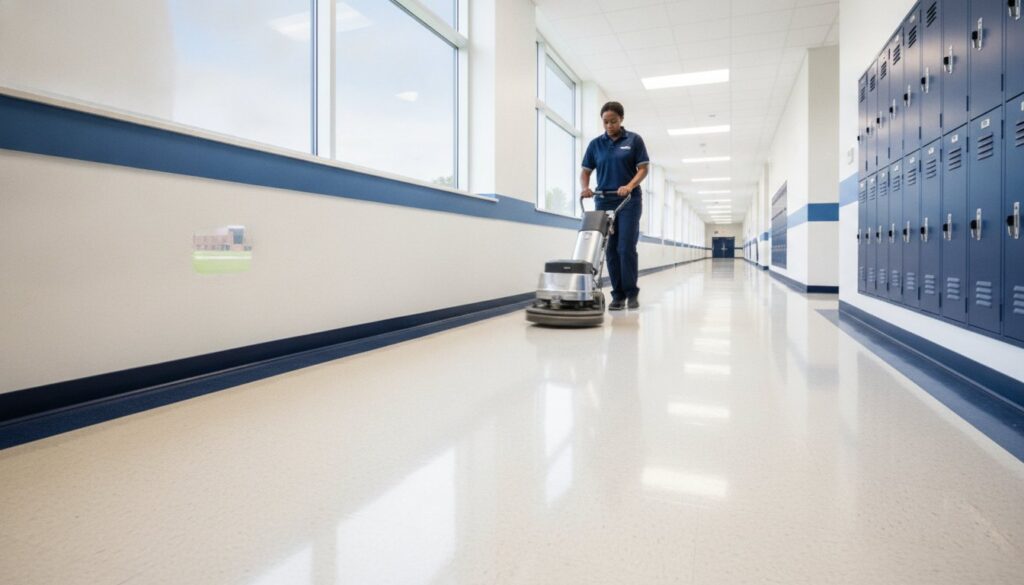
- Rotary Scrubbing: This is excellent for smooth tiles, using circular motion to break up surface films and prepare the floor for extraction.
- Cylindrical Brush Technology: We use this for textured commercial tiles and deep grout lines. The counter-rotating brushes reach into the valleys of the floor that flat pads often miss.
The real secret sauce of professional cleaning is vacuum recovery. High-powered suction ensures that all emulsified dirt and chemical residues are completely removed from the building. After extraction, we prioritize neutralizing the floor to restore a proper pH balance. If the floor remains too alkaline, it can become a magnet for new soil. A neutral, clean surface is easier for your staff to maintain and significantly reduces slip-and-fall risks. We’re committed to providing this level of detailed care so your facility can reflect the high standards of your business.
The Business Case: ROI of Professional Tile Restoration
A strategic financial decision often starts right under your feet. Investing in your facility’s appearance is more than just a cosmetic choice; it’s an exercise in asset preservation. Clean floors signal to your customers and employees that you value excellence and attention to detail. When grout lines are bright and tile surfaces are clear of biofilm, it builds brand trust and creates a sense of tranquility that boosts employee productivity. Conversely, neglected floors suggest a lack of oversight, which can quietly erode your professional reputation and the pride your team takes in their workspace.
Mitigating Slip-and-Fall Liabilities
Prioritizing safety is perhaps the most compelling argument for professional intervention. Over time, grease and chemical residues build up, significantly reducing the floor’s Coefficient of Friction (COF). This buildup makes surfaces dangerously slick, especially when wet. According to the National Safety Council, slips and falls are a leading cause of non-fatal workplace injuries in the US. In the event of an accident, having a documented history of commercial tile and grout cleaning serves as a vital legal defense. It proves you’ve taken proactive steps to maintain compliant safety standards. With OSHA penalties for serious violations reaching up to $16,550 as of January 2026, the cost of a restorative clean is a fraction of the potential liability. Maintaining these standards is a core part of a comprehensive janitorial cleaning strategy.
Extending the Lifecycle of Your Flooring
Total floor replacement is a massive capital expense that many facility managers hope to avoid. Replacing a commercial floor can easily cost $20,000 or more when you factor in labor, materials, and operational downtime. In contrast, a comprehensive restoration service might represent a $1,000 investment that saves the existing surface. If the tiles aren’t cracked or delaminating, they are likely salvageable through deep extraction. Professional commercial tile and grout cleaning removes the deep-seated grit that acts like sandpaper on your floor’s finish. By following this with a high-quality sealant, you protect the grout’s structure from permanent water damage and staining. This step extends the floor’s lifespan by years, allowing you to reallocate your capital budget toward other critical facility improvements. We view ourselves as your partner in asset preservation, helping you maximize every dollar spent on maintenance. For those managing properties in the Mid-Atlantic region, you can discover Triangle Legacy Flood Restoration & Carpet Cleaning for expert restoration and maintenance services.
Managing Chicago and Northwest Indiana Seasonal Challenges
Facility managers in Chicago and Northwest Indiana know that the arrival of winter brings more than just snow. It introduces a chemical cocktail of magnesium chloride and rock salt that is devastating to porous flooring. As pedestrians track in winter slush, these salts dissolve and seep deep into your grout lines. This isn’t just a cleaning challenge; it’s a structural threat to your property. Without professional intervention, the very materials used to keep your sidewalks safe can end up destroying your interior floors.
The Salt and Calcium Buildup Problem
When salt water enters the grout and eventually evaporates, it leaves behind concentrated salt crystals. These crystals expand within the pores of the grout, creating internal pressure that leads to hairline cracks or crumbling. You’ll often see this manifest as a white, powdery residue known as efflorescence. It’s a common sight in NWI winters, from Munster to Crown Point, and it signals that your grout is under stress. Standard mopping often fails here because it doesn’t neutralize the high pH of the salt. We use specialized neutralizing agents during our commercial tile and grout cleaning process to break down these mineral deposits. Applying a high-quality protective seal before the first frost is your best defense, as it creates a barrier that prevents the salt from entering the grout matrix in the first place.
Strategic Scheduling for Chicagoland Facilities
Maintaining a professional image in busy corridors like Highland and Dyer requires a proactive approach to seasonal care. For high-traffic retail centers or medical sites in Chicago, we recommend increasing the frequency of your maintenance during the peak winter months to prevent salt from etching the tile surface. A “Spring Reset” is also essential for every facility. This deep restorative service removes the accumulated chemical buildup from the winter, ensuring that your floors are clean and neutralized before the humidity of summer arrives. For a broader look at maintaining your facility year-round, consult our Ultimate Guide to Commercial Cleaning in Chicago. Integrating these seasonal strategies ensures your entryways remain safe and welcoming regardless of the Lake Michigan weather.
If your entryways are currently showing signs of salt damage or white hazy residues, our hard floor services can restore the integrity of your tile and grout before the damage becomes irreversible. We’re here to help you protect your investment through every Indiana season.
BeVa Solutions: Integrated Floor Care and Facility Excellence
At BeVa Cleaning Solutions, we don’t view floor care as an isolated task. We see it as a fundamental pillar of your facility’s health. Professional commercial tile and grout cleaning is most effective when it’s integrated into a comprehensive strategy. We position these restorative services as a critical component of our broader janitorial cleaning services. This approach ensures that the deep extraction we perform isn’t just a one-time fix but a new baseline for your daily maintenance. We’re here to be your dependable partner, providing the technical proficiency needed to protect your assets.
Our Day Porter cleaning teams play a vital role in this ecosystem. They act as the daily guardians of your investment, addressing spills and soil before they can settle back into the grout pores. This partnership between deep restorative care and consistent daily attention removes the operational burden from your shoulders and provides lasting tranquility. For many of our clients, this relationship begins during the high-stakes transition from a messy job site to an operational business. We specialize in post-construction cleaning, which often involves the first critical deep clean of new or renovated tile. Moving from that initial handover to recurring care allows us to protect your facility from day one.
Tailored Maintenance Plans for Local Businesses
Every business in Crown Point or Dyer has unique foot traffic patterns. A medical office has different hygiene requirements than a high-traffic retail storefront. We create custom maintenance frequencies that reflect these specific realities rather than offering a generic solution. We also look at the bigger picture of your facility’s curb appeal. There’s a natural synergy between our hard floor services and our high rise window cleaning. When your glass is clear and your floors are bright, your entire building projects a message of integrity and professional excellence. We achieve these results through advanced technology and a commitment to ethical labor practices. Our team is as invested in the Northwest Indiana community as you are.
Getting Started with a Facility Assessment
The path to better floors begins with an honest evaluation. We conduct a thorough site walkthrough to assess the current condition of your tile and identify areas of sub-surface contamination or salt damage. This isn’t a high-pressure pitch. It’s a professional evaluation designed to provide clarity and technical insight. We pride ourselves on transparency in our service contracts and reporting. You’ll know exactly what to expect and how we’re measuring success at every stage. If you’re ready to see the difference that restorative care can make for your building, contact us today for a professional consultation. Let’s work together to restore your facility’s hygiene, safety, and long-term asset value.
Elevate Your Facility Standards Through Restorative Care
Your floors are more than just a surface; they’re a reflection of your commitment to excellence and community health. We’ve explored how the porous nature of grout demands more than a standard mop and bucket, especially when facing the harsh seasonal salt of the Chicagoland area. By choosing professional commercial tile and grout cleaning, you aren’t just improving aesthetics. You’re actively mitigating slip-and-fall risks and extending the functional life of your flooring investment. This proactive approach transforms your maintenance from a recurring headache into a strategic business advantage.
Integrity drives our work. BeVa Cleaning Solutions serves Northwest Indiana and Chicago with a focus on professional authority and transparency. We use specialized industrial-grade extraction equipment and offer seamless integration with our janitorial and day porter services to maintain your results. It’s time to move beyond the mop water trap and experience the tranquility of a truly restored environment. Request a Professional Floor Assessment from BeVa Cleaning to see how we can optimize your facility. We look forward to being your dependable partner in creating a cleaner, safer space for your team and your visitors.
Frequently Asked Questions
How long does a commercial tile and grout cleaning service take?
A 1,000-square-foot area typically takes four to six hours, depending on the layout and soil level. This timeframe includes pre-treatment, agitation, and high-pressure extraction. We prioritize efficiency to ensure your facility returns to full operation as quickly as possible. Every project starts with a clear timeline so you can plan your staffing and access accordingly.
Can professional cleaning remove permanent stains from grout?
Most stains that appear permanent are actually layers of trapped soil that our extraction process can lift. If a substance has chemically altered the grout’s pigment, we may suggest a color-sealing treatment to restore a uniform appearance. Restorative cleaning is almost always successful in removing the organic biofilms and grease that cause the most common discoloration.
Is it necessary to seal the grout after a professional cleaning?
Sealing is a critical step that protects the investment you’ve made in commercial tile and grout cleaning. It fills the microscopic pores within the grout, creating a barrier against moisture, oils, and salt. Without a seal, the grout remains vulnerable to immediate re-soiling. A high-quality sealant simplifies your daily maintenance and keeps your floors looking professional for a much longer period.
How often should a commercial facility have its floors deep cleaned?
Most facilities benefit from a deep clean every six to twelve months. High-traffic areas in Northwest Indiana often require a bi-annual schedule to manage the heavy salt and slush brought in during winter. We help you establish a custom frequency based on your specific foot traffic and the environmental challenges of your location to ensure optimal floor health.
Will the cleaning process disrupt my business operations?
We specialize in minimizing operational burdens by scheduling our services during your facility’s low-traffic or closed hours. Our high-powered vacuum recovery system ensures that floors are dry and safe for foot traffic almost immediately after we finish. This efficiency allows you to maintain a high standard of hygiene without sacrificing your team’s productivity or your customers’ convenience.
What is the difference between residential and commercial grout cleaning?
Commercial environments face much higher soil loads and foot traffic than homes. We use specialized industrial emulsifiers and high-PSI extraction equipment that residential-grade machines can’t match. This level of power is necessary to break down the complex oils and biofilms found in commercial kitchens, restrooms, and lobbies. Our process is built for durability and large-scale efficiency. If you are looking for similar high-standard services in the Berkeley area, check out Super Clean 360 for both residential and commercial cleaning needs.
How does professional floor care impact my business insurance?
Maintaining a consistent schedule for commercial tile and grout cleaning can help reduce your liability profile. By keeping your floors free of grease and buildup, you maintain a higher Coefficient of Friction, which directly lowers the risk of slip-and-fall accidents. Insurance companies value this documentation as evidence of your commitment to a safe and compliant working environment.
Can you clean tile in a high-rise building without water damage?
Our team uses specialized portable extraction technology designed specifically for high-rise challenges. These units provide the heat and pressure required for restoration while maintaining total control over water recovery. This prevents any moisture from migrating into the building’s structure or affecting neighboring units. You get the benefits of industrial cleaning with the precision needed for complex corporate environments.